Birds_
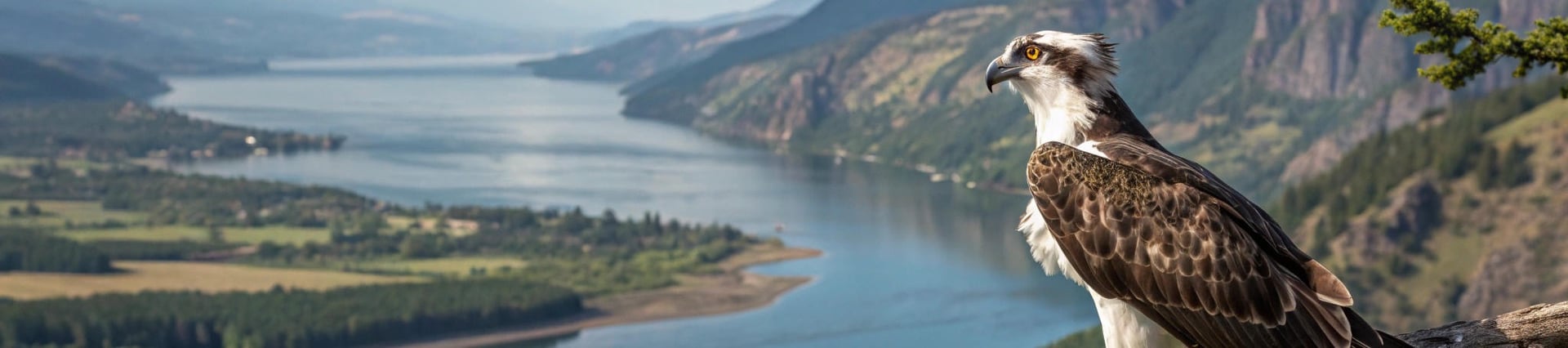
The Columbia River Gorge is home to a rich mix of birds—from year-round residents to seasonal visitors. With habitats ranging from river shoreline and wetlands to dense forests and open grasslands, the Gorge offers excellent birdwatching in every season.
This variety of habitats in the Columbia River Gorge supports a diverse community of birds. While you're hiking to waterfalls, exploring historic sites, or tasting wine, you might spot an osprey diving into the river, a great blue heron standing motionless at the water's edge, or an American dipper bobbing on rocks in a rushing stream. The following list isn't comprehensive, the Gorge hosts well over 200 species throughout the year, but highlights 15 birds that are both commonly seen and worth noting when you encounter them.


American Dipper
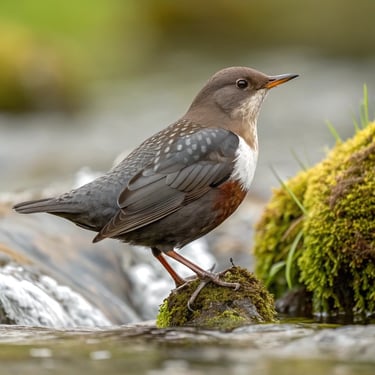
American Dipper is the Gorge's most unique year-round waterbird—a stocky, slate-gray songbird that bobs constantly on streamside rocks before plunging into rushing water to walk along the bottom hunting aquatic insects. It's the only North American songbird that swims. In the Columbia River Gorge, it's reliably spotted along fast-flowing streams near popular waterfall areas like Multnomah Falls, Wahkeena Creek, and Horsetail Falls, where clear, cold water and rocky perches create ideal dipper habitat. Listen for its loud, wren-like song echoing off canyon walls.
Bald Eagle
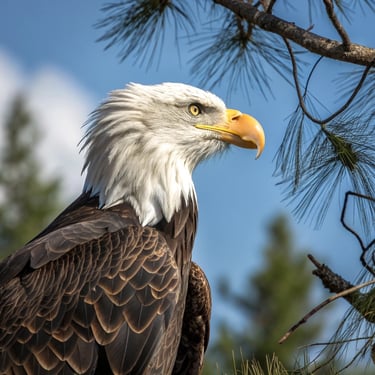
Bald Eagle is the Gorge's most iconic large raptor—unmistakable in adult plumage with its white head and tail contrasting against a dark brown body. Juveniles are mottled brown and take 4-5 years to develop adult colors. In the Columbia River Gorge, eagles are present year-round but numbers peak in late fall through early spring when salmon runs attract birds from across the region. Watch for them perched in tall cottonwoods along the river or soaring on thermals above the cliffs, particularly near Beacon Rock, Bonneville Dam, and the Hood River waterfront.
Belted Kingfisher
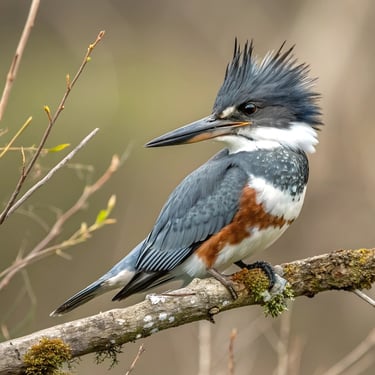
Belted Kingfisher is a loud, shaggy-crested bird that announces itself with a rattling call before you ever see it. Blue-gray above with a white collar and rusty belly band (on females), it hovers over water then plunges headfirst after small fish. In the Columbia River Gorge, kingfishers are present year-round along the main river, backwater sloughs, and larger tributary streams. Look for them perched on overhanging branches or wires near water at spots like Rooster Rock, Beacon Rock, and the calmer stretches around Hood River and The Dalles.
Black-headed Grosbeak
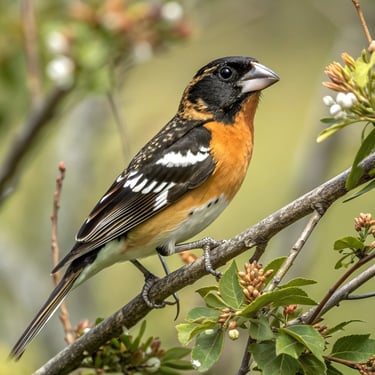
Black-headed Grosbeak is one of the Gorge's most welcome spring arrivals—a chunky, robin-sized songbird with a massive pale bill built for cracking seeds. Males sport a striking black head, orange breast, and bold wing patches; females are streaky brown with a strong face pattern. In the Columbia River Gorge, they arrive in early May and fill deciduous woodlands with a rich, whistled song often compared to a "drunk robin." Listen for them in oak and maple areas along the Historic Highway, Latourell Falls, and riparian corridors throughout the western Gorge through late summer.
California Quail
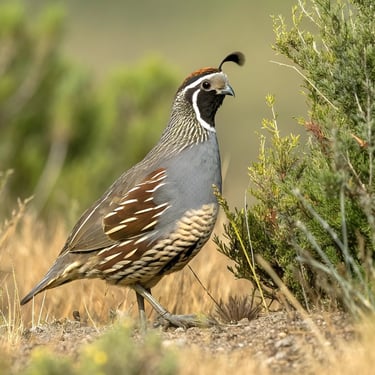
California Quail is the Gorge's most charming ground bird—plump and gray-brown with intricate scaling on the belly and a distinctive forward-curving topknot plume. They travel in family groups called coveys, often seen scurrying single-file across trails before exploding into short, whirring flights when startled. In the Columbia River Gorge, they're present year-round in the drier eastern sections, particularly around Catherine Creek, Rowena Plateau, and the oak woodlands near Mosier, where brushy edges and grassy slopes provide cover and seeds.
Cedar Waxwing
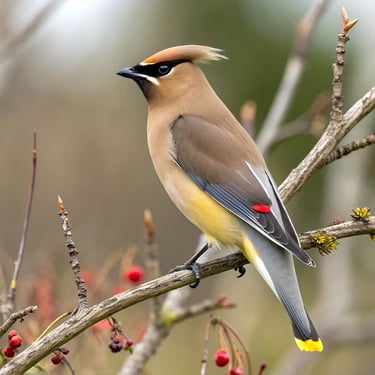
Cedar Waxwing is one of the Gorge's sleekest birds—silky brown with a black mask, yellow-tipped tail, and waxy red spots on the wing feathers. They travel in tight, chattering flocks that descend on berry-laden trees and shrubs, sometimes stripping them bare in a single visit. In the Columbia River Gorge, waxwings are present year-round but most conspicuous in late summer and fall when fruit ripens. Watch for restless flocks in ornamental plantings at Multnomah Falls Lodge, Vista House, and anywhere mountain ash, serviceberry, or hawthorn are fruiting.
Common Merganser
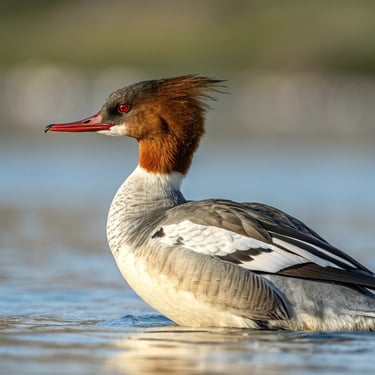
Common Merganser is the Gorge's most frequently seen diving duck—a large, long-bodied bird with a thin, serrated bill designed for catching fish. Males are striking with a dark green head and clean white body; females have a shaggy rusty crest and gray body. In the Columbia River Gorge, mergansers are present year-round on the main river and larger tributaries. Look for them loafing on rocks or swimming in groups near Bonneville Dam, Cascade Locks Marine Park, and the calmer stretches around Hood River, often diving in unison when feeding.
Great Blue Heron
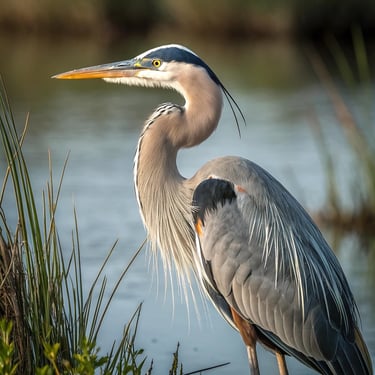
Great Blue Heron is the Gorge's largest wading bird—standing nearly four feet tall with a six-foot wingspan, blue-gray plumage, and a dagger-like bill. It hunts with statue-like patience, waiting motionless at the water's edge before striking at fish, frogs, or rodents with lightning speed. In the Columbia River Gorge, herons are present year-round along the river margins, wetlands, and backwater sloughs. They're reliably seen at Steigerwald Lake National Wildlife Refuge, Rooster Rock, and shallow areas near The Dalles, often standing alone in classic heron pose.
Osprey
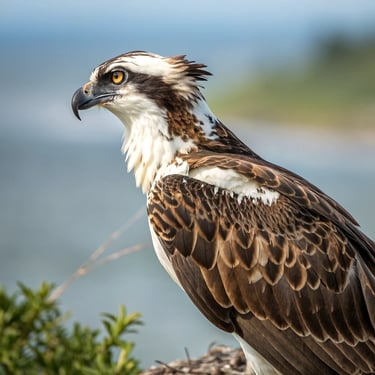
Osprey is the Gorge's most specialized fish-hunting raptor—a large, long-winged hawk with a white head, dark eye stripe, and distinctive crook in its wings during flight. Unlike eagles, ospreys plunge feet-first into the water, often submerging completely before emerging with a fish gripped headfirst in their talons. In the Columbia River Gorge, ospreys arrive in late March and stay through September, nesting on channel markers, bridge structures, and platform poles. Watch for their spectacular dives near Bonneville Dam, Hood River, and throughout the main river corridor.
Red-Tailed Hawk
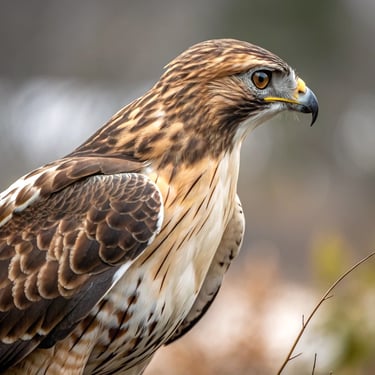
Red-Tailed Hawk is the Gorge's most abundant large raptor—a bulky, broad-winged hawk often seen perched on roadside poles or soaring in wide circles on thermals. Adults show the namesake rusty-red tail; plumage otherwise varies from pale to dark brown. Their raspy, descending scream is the classic "hawk call" used in movies for almost every raptor. In the Columbia River Gorge, red-tails are present year-round in open areas and forest edges throughout the corridor. They're especially visible along I-84, the Historic Highway, and the drier grasslands around Rowena and The Dalles.
Rufous Hummingbird
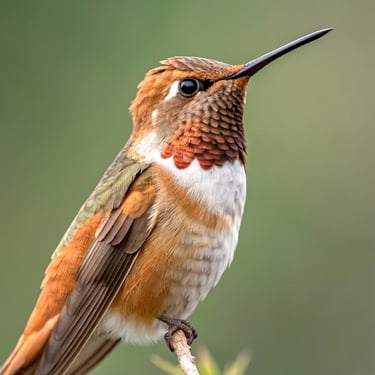
Rufous Hummingbird is the Gorge's feistiest spring migrant—a tiny, coppery-orange blur that defends flower patches with aggressive chases and chittering calls. Males are brilliant rufous-orange with a glittering red throat; females are green above with rufous flanks. Despite weighing less than a nickel, they migrate from Mexico to Alaska. In the Columbia River Gorge, rufous hummingbirds pass through in April and May, then again in July and August on their return south. Look for them at red-flowering currant, columbine, and backyard feeders throughout the Gorge, particularly in the western forested sections.
Turkey Vulture
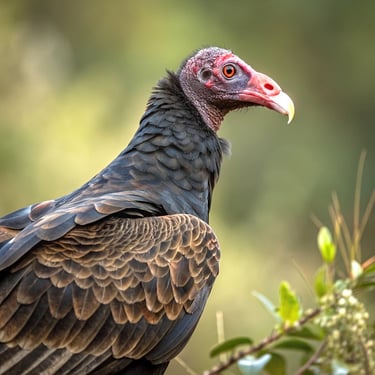
Turkey Vulture is the Gorge's most common soaring scavenger—a large, dark bird that rides thermals for hours with its wings held in a distinctive shallow V-shape, rocking side to side in the wind. Up close, the bare red head is unmistakable. They locate carrion primarily by smell, rare among birds. In the Columbia River Gorge, vultures arrive in late March and stay through October, becoming a familiar sight circling above cliff faces and open slopes. Watch for kettles of vultures rising on warm afternoon thermals near Crown Point, Beacon Rock, and throughout the eastern Gorge.
Violet-Green Swallow
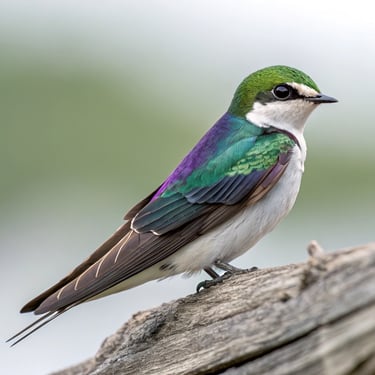
Violet-green Swallow is the Gorge's most abundant cliff-nesting swallow—a small, acrobatic bird with iridescent green back, violet rump, and clean white underparts that extend onto the face. They nest in crevices on basalt cliffs and under bridges, filling the air with chattering calls as they hawk insects on the wing. In the Columbia River Gorge, violet-greens arrive in early April and stay through September. They're especially common around Vista House, Multnomah Falls Lodge, and any cliff face or historic stone bridge along the Historic Highway, often mixing with white-throated swifts.
Western Tanager
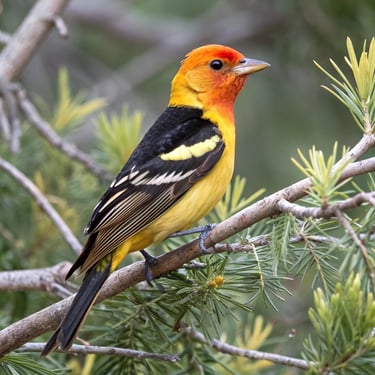
Western Tanager is the Gorge's most brilliantly colored forest bird—males are unmistakable with a flame-red head, yellow body, and black wings with bold wingbars. Females are yellow-green with wingbars. Despite the tropical appearance, they're common breeders in Northwest conifer forests. In the Columbia River Gorge, tanagers arrive in early May and stay through August, their burry song drifting down from high in the canopy. Look for flashes of color in the tall conifers along the Historic Highway, Eagle Creek, and forested trails in the western Gorge, especially during the May migration peak.
Yellow Warbler
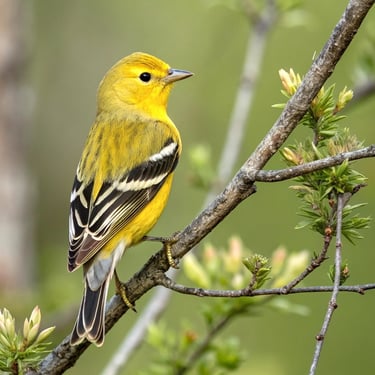
Yellow Warbler is the Gorge's brightest streamside songbird—a small, active bird that's almost entirely sunny yellow, with males showing rusty streaks on the breast. Their cheerful "sweet-sweet-sweet, I'm so sweet" song is one of the most recognizable sounds of riparian areas. In the Columbia River Gorge, yellow warblers arrive in late April and stay through August, nesting in willows and shrubs along streams and wetland edges. They're reliably found at Steigerwald Lake, Catherine Creek, and willow thickets throughout the Gorge, constantly gleaning insects from foliage.
Copyright Ticklecreek Design - All Rights Reserved
Contact | Disclaimer